Living deliberately with calm, depth, and intention in a fast world.

Fermentation as a Slow Living Kitchen Staple
Discover gentle fermentation as a slow living kitchen staple—traditional, fermented foods that nourish your gut, support digestion, and invite mindful nourishment.
Written by Eszter
1/10/20264 min read
In a world that moves fast and rewards constant productivity, fermentation quietly invites us to slow down.
It doesn’t demand attention.
It doesn’t offer instant results.
It simply works — patiently, gently — transforming simple ingredients into foods that nourish both body and rhythm.
For me, fermentation has become more than a method of food preparation. It’s a slow living kitchen staple — one that supports digestion, gut health, and a more intentional relationship with nourishment.
What Fermentation Really Is And How It Works
Fermentation is a natural process in which beneficial microorganisms — bacteria and yeasts — transform sugars and starches into acids and other compounds. This process enhances flavor, texture, and nutrient availability while supporting gut health.
But beyond its biological definition, fermentation mirrors the philosophy of slow living itself.
It requires patience instead of urgency.
Care instead of control.
Trust instead of constant adjustment.
Chop fresh vegetables, add salt and gently massage the vegetables until they release their natural juices (it takes approximately 30 minutes).
Pack them tightly into the jar, making sure the vegetables are fully submerged in their own brine, If needed, top up with a 2% salt brine, leaving about 1–1.5 cm of headspace below the lid.
Cover loosely and let ferment at room temperature for several days to a few weeks, tasting occasionally.
Time does the rest — transforming simple ingredients into gently preserved, gut-supporting food.
Gut Health, Digestion, and the Beauty of Gentle Support
The gut microbiome plays a crucial role in digestion, immune function, inflammation regulation, and even mental wellbeing. Fermented foods naturally contain probiotics that help support this delicate internal ecosystem.
What I appreciate most about fermented foods is how subtle their impact can be. They don’t overwhelm the body or promise quick fixes. Instead, they work gradually — supporting digestion, easing bloating, and creating a sense of internal balance over time.
This kind of nourishment aligns deeply with slow living: steady, consistent, and kind.
Everyday Fermented Foods — Without Extremes
Fermentation doesn’t need to be complicated or dramatic to be effective. Many gentle, everyday foods can easily become part of a slow living kitchen.
Vegetables like sauerkraut, fermented carrots, beets, or mild kimchi.
Dairy options such as yogurt or kefir, if well tolerated.
Grains and legumes like sourdough bread, miso, or tempeh.
And lightly fermented drinks like kombucha or water kefir.
A small amount, enjoyed regularly, is often more supportive than large quantities consumed occasionally.
Supporting Digestion Through Pleasure, Not Restriction
One of the most underestimated aspects of digestion is enjoyment.
Eating slowly, calmly, and with pleasure supports the nervous system — and digestion follows. Fermented foods, with their complex and slightly tangy flavors, naturally encourage this slower pace.
This isn’t about dietary rules or restriction.
It’s about choosing foods that feel grounding, satisfying, and alive.
Fermentation as a Ritual, Not a Project
Preparing fermented foods can become a simple kitchen ritual.
Chopping.
Salting.
Filling jars.
Waiting.
There’s no rush and no pressure to perfect the process. The act itself becomes grounding — a reminder that some things don’t need constant supervision to turn out well.
A Personal Note from My Kitchen
I’ve realized over time that I’m drawn to almost everything that’s fermented. But if I had to choose favorites, they would be kombucha, water kefir, miso, and kimchi.
My first encounter with kombucha happened in my teenage years, long before it was something you could easily find in shops. One of my mother’s friends brought us a kombucha culture, and slowly, patiently, we made our own kombucha at home.
Watching that process unfold felt almost magical. Time became an ingredient. You couldn’t rush it — only care for it, wait, and observe how something simple transformed into something nourishing. That experience stayed with me and shaped how I relate to food even now.
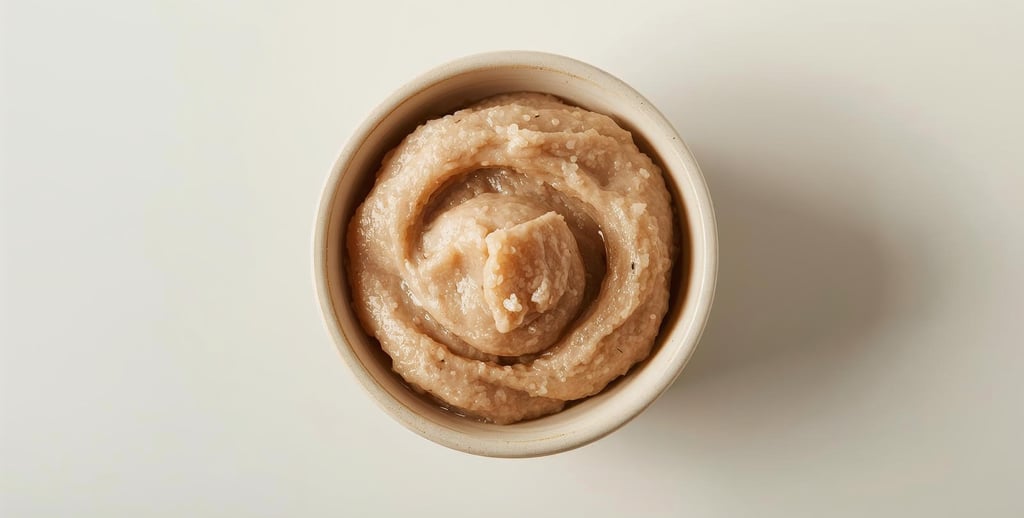
Miso entered my kitchen much later. I only discovered it recently, yet it instantly became a staple. What surprised me most was its versatility — beyond soups and warm dishes, it’s absolutely delicious spread generously on a good slice of sourdough bread. Simple, savory, deeply comforting.
These foods nourish more than my body. They remind me to trust slow processes, both in the kitchen and in life.
How Kombucha Is Made (A Gentle Method)
Ingredients for 1 liter of kombucha:
60–70 g sugar (The sugar feeds the fermentation process — most of it is gradually consumed during fermentation.)
1 tea bag (black or green)
1 SCOBY + ~100 ml starter liquid
Method:
Brew sweetened tea and let it cool completely.
Add a kombucha culture and a little starter liquid.
Cover loosely and ferment at room temperature for several days.
Taste, then bottle and allow a short second fermentation if desired.
Time and patience turn simple tea into a living, gently fermented drink.
How Water Kefir Is Made (A Simple Daily Ritual)
Ingredients for 1 liter of water kefir:
30–40 g sugar (The sugar feeds the fermentation and is largely consumed during the process.)
1 liter filtered water
1–2 tablespoons water kefir grains
Optional: a small piece of dried fruit (fig or raisin) or a slice of lemon (for minerals)
Method:
Dissolve sugar in filtered water and add water kefir grains.
Cover lightly and ferment at room temperature for 24–48 hours.
Strain the grains, then enjoy as is or flavor gently with fruit or herbs.
A quiet, daily fermentation that fits easily into slow living routines.
A Quiet Return to Trusting Food Again
Fermentation invites us back to an older, gentler relationship with food — one rooted in time, care, and simplicity.
Health doesn’t always come from doing more.
Sometimes it comes from allowing things to unfold naturally.
And that, in itself, is deeply nourishing.


You may feel drawn to these gentle reflections as well.
Contact
© 2026 All rights reserved.
Email: